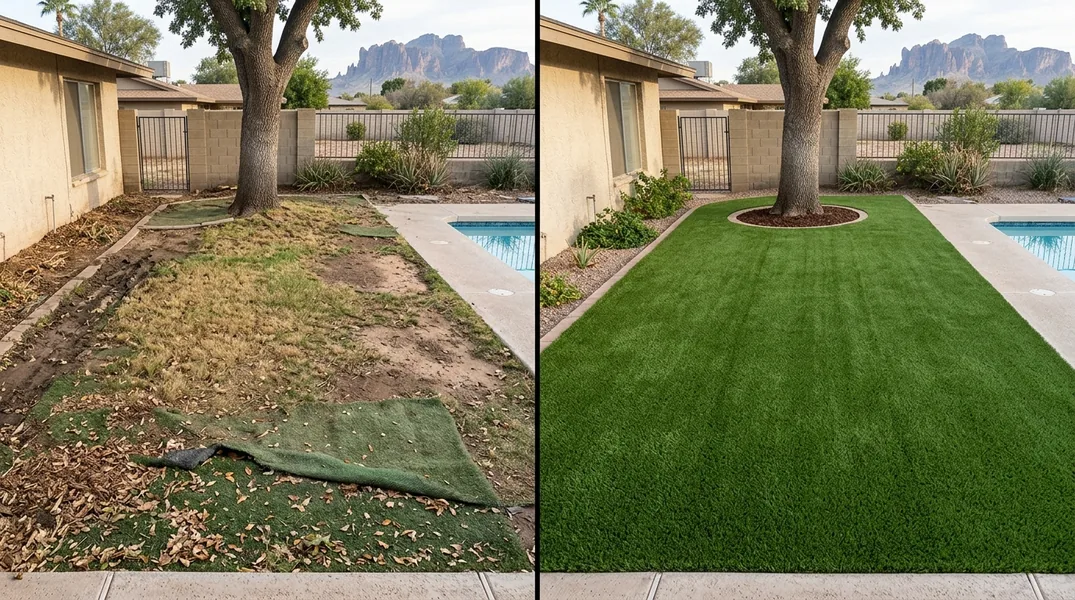
Understanding Flood Irrigation and Artificial Grass Drainage
If you own a property in Mesa with flood irrigation, you already know the challenges this traditional watering method presents. Flood irrigation, also called furrow or basin irrigation, delivers water across large areas by allowing it to flow across the ground surface. While this method has been used in Arizona agriculture for generations, it creates specific complications when you want to install artificial grass. The standing water, prolonged moisture exposure, and soil saturation can undermine a turf installation if the proper drainage infrastructure isn't in place from day one.
The good news is that Residential Artificial Grass Installation on flood-irrigated lots is absolutely possible. It requires careful planning, proper grading, and the right combination of materials to manage water movement effectively. Many homeowners in Mesa have successfully transitioned from natural grass or bare soil to synthetic turf despite these irrigation systems. The key is understanding how water behaves on your property and designing a base system that channels excess moisture away from the turf rather than allowing it to pool underneath.
What to Put Under Artificial Grass: The Foundation Matters
The foundation of any artificial grass installation is critical, but it becomes absolutely essential on properties with flood irrigation. What to put under artificial grass goes far beyond simply laying down fabric and turf. The proper base system acts as a buffer between the wet soil and your new lawn, preventing moisture from saturating the backing and creating an environment where mold, mildew, and odor can develop. On flood-irrigated lots, this layering system must be engineered to handle periodic water influx without compromising the integrity of your turf.
The standard base preparation for flood-irrigated properties typically includes several distinct layers, each serving a specific purpose. The bottom layer should consist of compacted native soil or crushed rock that allows water to permeate while providing structural support. Above this, a layer of coarse gravel or recycled asphalt creates additional drainage capacity. The critical middle layer is a high-quality landscape fabric or geotextile membrane that prevents fine soil particles from migrating upward while still allowing water to drain freely. Finally, a layer of crushed stone or sand provides the cushioning and leveling surface upon which the artificial turf is installed. This multi-layer approach ensures that even during heavy irrigation cycles, water moves down and away rather than creating a soggy, unstable base.
Artificial Grass Underlay Selection for Mesa's Climate and Water Conditions
Artificial grass underlay is not a one-size-fits-all product, especially in flood-irrigated environments. The underlay serves multiple functions: it provides cushioning for comfort and safety, it acts as a thermal barrier, and critically, it must allow water to drain through efficiently. For properties in Mesa with flood irrigation, selecting the wrong underlay can result in a waterlogged installation that smells, deteriorates prematurely, and fails to provide the durability you expect from artificial grass.
Modern underlays designed for high-drainage applications use open-cell foam or crumb rubber that allows water to pass through rather than trapping it. Some premium options include built-in antimicrobial treatments that resist mold and mildew growth, which is particularly valuable in areas prone to moisture retention. The thickness of the underlay also matters. While thinner underlays save money upfront, thicker options (typically 3/8 inch to 1/2 inch) provide better drainage performance and longer-term durability. When Mesa Turf Installation evaluates your flood-irrigated property, we assess not only the turf base prep requirements but also recommend an underlay system specifically suited to your site's water management needs. Choosing the right underlay is an investment in years of trouble-free enjoyment of your new lawn.
Turf Base Prep on Flood-Irrigated Lots: Professional Installation is Essential
Turf base prep on a flood-irrigated property requires expertise that goes beyond standard artificial grass installation. The grading and slope of your yard must be carefully evaluated to ensure that irrigation water moves away from the turf area or, if it must cross the installation, that it passes through without pooling. A professional installer will assess your property's topography, the direction of water flow during irrigation cycles, and the soil composition to design a base system that handles these conditions. This is not a DIY project if you want results that last.
Proper base preparation begins with removing existing sod and vegetation, then evaluating the existing soil structure. On flood-irrigated lots, we often need to address compacted or clay-heavy soils that naturally resist drainage. Adding amendments, regrading to establish proper slope, and installing perimeter drainage solutions may all be necessary. The base materials must be installed in layers, each compacted to the appropriate density to provide stability without restricting water movement. This is where the difference between amateur installation and professional work becomes obvious. A poorly prepared base might look fine initially, but when the irrigation system runs, water will find its way to the weakest points, leading to settling, soft spots, and eventual turf failure. Investing in professional turf base prep ensures your installation performs as intended for years to come.
Drainage Solutions Specific to Flood Irrigation Systems
Artificial grass drainage on flood-irrigated properties sometimes requires more than just proper layering. Depending on your specific situation, additional drainage infrastructure might be recommended. French drains, perimeter trenches, or subsurface drainage lines can be installed to actively manage water movement and prevent saturation. These solutions are particularly valuable if your property slopes toward the turf area or if historical water issues suggest that passive drainage alone won't suffice.
Another consideration is the relationship between your turf installation and the flood irrigation system itself. Some homeowners choose to modify their irrigation approach after installing artificial grass, switching to drip irrigation or micro-spray systems that deliver water more precisely and with less runoff. Others prefer to keep their existing flood system but ensure that the turf installation is positioned and designed to handle the water flow. During a site assessment, a professional installer will discuss these options with you and help you understand the trade-offs. Some solutions might involve minor modifications to your irrigation infrastructure, which could actually improve water efficiency across your entire property. The goal is creating a landscape that works harmoniously with your existing systems while protecting your new turf investment.
Getting Professional Help: Artificial Grass Installation Near Me in Mesa
If you're considering artificial grass for a flood-irrigated property in Mesa, the most important step is consulting with experienced professionals who understand the unique challenges of your situation. Mesa Turf Installation has extensive experience working with flood-irrigated properties throughout the region. We understand Arizona's irrigation traditions and the specific water management challenges they create for modern landscaping. Whether you're interested in Residential Artificial Grass Installation, Pet Turf & Dog Run Installation, or even Pool Surround Turf, we bring the same commitment to proper drainage and base preparation that flood-irrigated properties demand.
We recommend scheduling a free estimate so we can evaluate your specific property, discuss your goals, and provide a detailed plan that addresses your drainage concerns. You can reach Mesa Turf Installation at (480) 452-1014 to discuss your project. During a site visit, we'll examine your soil type, irrigation system, topography, and any history of water issues. This information allows us to design a turf installation that will thrive despite the challenges of flood irrigation. Artificial grass can transform your outdoor space into a beautiful, low-maintenance area, but only if it's installed correctly from the ground up. Let us help you create a landscape that works with your property's existing systems, not against them.
Looking for a professional artificial grass installation company in Mesa? Mesa Turf Installation responds fast for all your artificial grass installation needs.
Get a Free Quote